

A Thorough Clean, From Firebox to Flue
Chimney Cleaning
in Calgary & Area
Soot, creosote and debris can collect throughout a chimney system as a wood-burning fireplace, stove or insert is used.
Crown Chimney Sweeps provides professional chimney cleaning in Calgary using specialized brushes, flexible rods, vacuum equipment and methods refined through more than 40 years of industry experience.
We prepare the work area, clean the accessible components of the system and explain any visible concerns we observe during the appointment.
Professional Chimney Cleaning
Refined Through More Than 40 Years of Experience
A chimney carries smoke and combustion gases through the flue while a wood-burning appliance is in use. Over time, soot, creosote and other material can collect on the firebox, damper, smoke chamber, flue and related components.
The amount and type of buildup can vary considerably from one system to another. Fireplace use, the wood being burned, burning habits, appliance design, chimney configuration and outside conditions can all affect what accumulates.
Crown Chimney Sweeps uses professional equipment and established cleaning methods to remove accessible deposits and loose obstructions. We also visually examine the accessible components involved in the service and discuss any conditions that may require additional attention.
Our goal is to provide a thorough, organized service while helping you better understand the condition of your chimney and fireplace system.
When Cleaning May Be Done
What Is Your Chimney Telling You?
Visible Buildup
Regular Fireplace Use
If your fireplace, wood stove or insert has been used regularly throughout the heating season, consider arranging an examination and cleaning based on the buildup present.
Unknown Service History
Debris, Odours or Draft Changes
Falling debris, unusual odours or changes in smoke and drafting performance may indicate buildup or an obstruction. Describe what you have noticed when booking so we can recommend the appropriate starting service.
1
Protect The Work Area
2
Examine Accessible Components
3
Sweep The Flue & Fireplace
With collection equipment operating, we use professional chimney brushes and flexible rods to sweep accessible areas of the flue and smoke chamber. Hand brushes and other tools may be used around the firebox, damper opening and connected components.
The equipment and cleaning direction may vary depending on the appliance, chimney design and access. When the chimney cap can be appropriately accessed as part of the service, it may also be examined and cleaned.
4
Remove Deposists & Review Findings
Accessible soot, creosote and loose debris removed during cleaning are collected for disposal. We wipe down the hearth and organize the work area once the cleaning is complete.
If we observe a condition requiring further attention, we explain what was found. Photographs may be taken when they help document the concern or clarify a recommendation. Important observations can also be noted on the invoice or service form.
No additional service or repair proceeds without your knowledge and approval.
Professional Equipment
Careful Methods. Respect For Your Home.
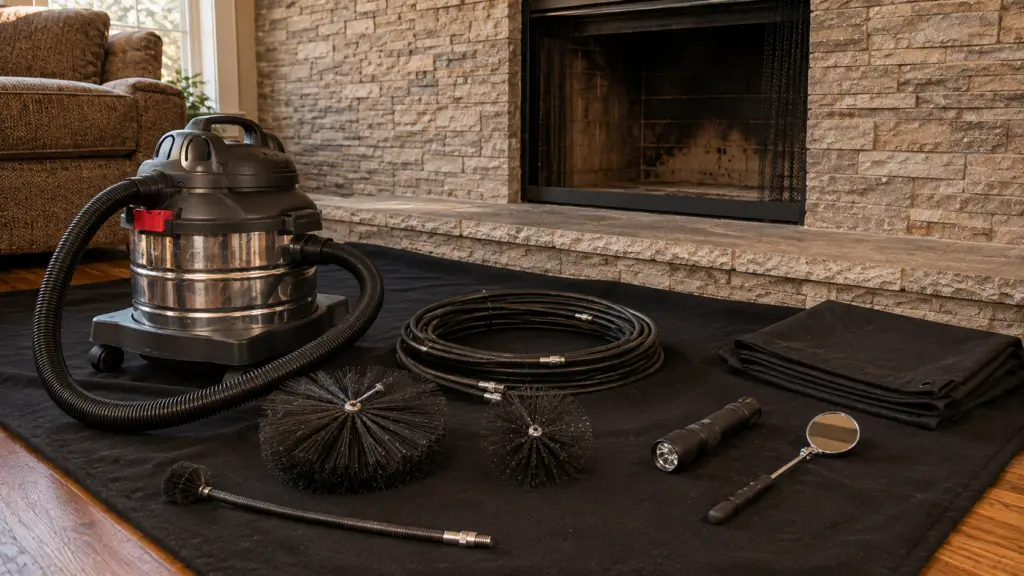
Depending on the installation, our technicians may use:
- Chimney brushes in sizes and styles suited to the flue
- Flexible rods for reaching through the chimney system
- Hand brushes for the firebox, damper opening and accessible components
- Vacuum and collection equipment used during the cleaning process
- Inspection mirrors, lights and other visual-assessment tools
- Cloth coverings to protect the area surrounding the appliance
- Ladders and exterior-access equipment when the service requires them
We continually refine our methods and maintain our knowledge of wood-burning appliances, chimney systems and professional cleaning practices.
Questions? Contact Us Today.
If you have any questions before booking a service, please don’t hesitate to give us a call or email us at info@crownchimneysweeps.com
How often should I have my chimney cleaned?
How often your chimney needs to be cleaned depends on how frequently the appliance is used, the type and condition of the wood burned, the chimney system and the amount of buildup present. In accordance with NFC 2.6.1.4, chimneys shall be examined annually and cleaned whenever soot, creosote, debris or other obstructions have accumulated.
How do I know if my chimney needs cleaning?
Visible soot or creosote, falling debris, unusual odours, smoke entering the room or reduced drafting can indicate that the chimney needs attention. It may also be time to book if you use your fireplace regularly or do not know when it was last serviced.
What is included in a chimney-cleaning appointment?
Will chimney cleaning make a mess inside my home?
Our technicians use protective coverings, professional vacuum equipment and established cleaning methods to help contain soot and debris. We prepare the area before cleaning and tidy the hearth and surrounding workspace when the service is complete.
How should I prepare for the appointment?
Do not use the fireplace or wood-burning appliance before the appointment, and ensure it is completely cool when the technician arrives. Remove ashes if you can do so without creating dust, and clear firewood, decorations, furniture and personal belongings from the surrounding work area.
Does chimney cleaning include a WETT inspection?
No. Chimney cleaning and WETT inspections are separate services. Cleaning removes accessible deposits and debris, while a WETT inspection assesses accessible components for compliance with applicable codes, standards and manufacturer requirements. Tell us when booking if you require both.
Can you clean chimneys connected to fireplaces, wood stoves and inserts?
Yes. Crown Chimney Sweeps services many wood-burning fireplaces, stoves and inserts. Cleaning methods and access requirements vary by appliance and chimney system, so tell us what type of appliance you have when scheduling your appointment.
Can you remove animal nests or other chimney obstructions?
Accessible nesting material and loose debris may be removable during service, depending on the obstruction, its location and whether wildlife is present. Let us know about unusual sounds, odours or suspected animal activity before the appointment so we can discuss the appropriate next step.
What happens if you find damage or another concern?
The technician will explain what was observed and may use photographs to help document the condition. If repair, further evaluation or another service is recommended, the available next steps will be discussed with you. No additional work proceeds without your knowledge and approval.